


AMBLISK
AMBLISK
Additive Manufacturing of a Blisk for Gas Turbines Used in Aerospace Applications
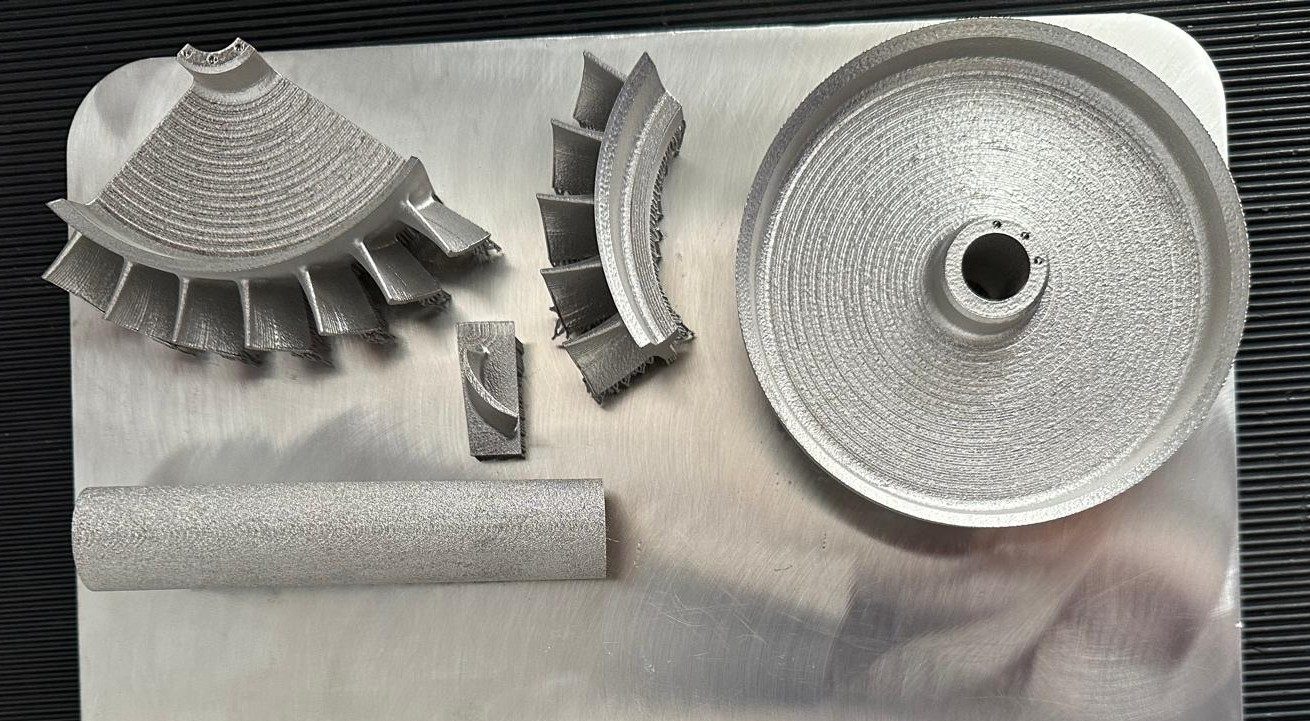
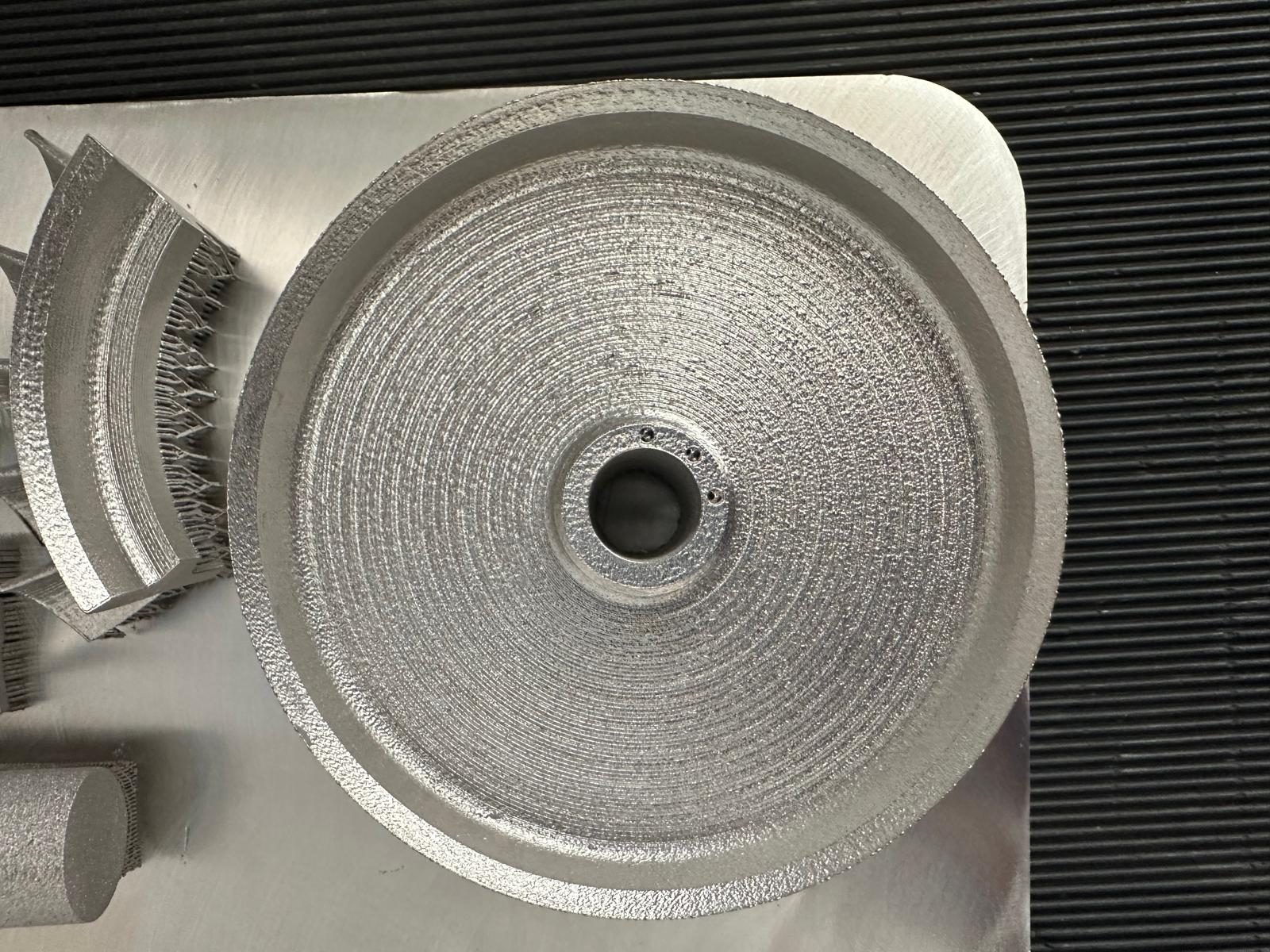
The AMBLISK project aims to conduct theoretical and experimental research into the additive manufacturing, by laser powder bed fusion (L-PBF), of an integrally bladed turbine rotor (blisk) made of IN718 superalloy, intended for gas turbines used in aerospace applications. The research carried out at COMOTI focuses on analysing and understanding the relationships between process parameters, microstructure and material properties, as well as the behaviour of lattice structures, in order to optimise the manufacturing process and the characteristics of the resulting material and structures. This research is correlated with rotor design and the integration of internal lattice structures, with the aim of reducing mass and improving thermomechanical behaviour.
Project duration: 24 months (26/08/2025–26/08/2027)
Main contractor: INCD Turbomotoare COMOTII
Target TRL: TRL 3
Project objectives
- The main objective of the project is to carry out theoretical and experimental research for the development, using L-PBF technology, of a reduced-mass integrally bladed turbine rotor (blisk) made of IN718 superalloy, intended for gas turbines used in aerospace applications.
- The specific objectives are:
- Define the operating conditions and design the rotor for additive manufacturing.
- Optimise the L-PBF process parameters for IN718 superalloy.
- Test, characterise and validate the material and lattice structures.
- Perform topology optimisation of the rotor and integrate internal lattice structures to reduce mass.
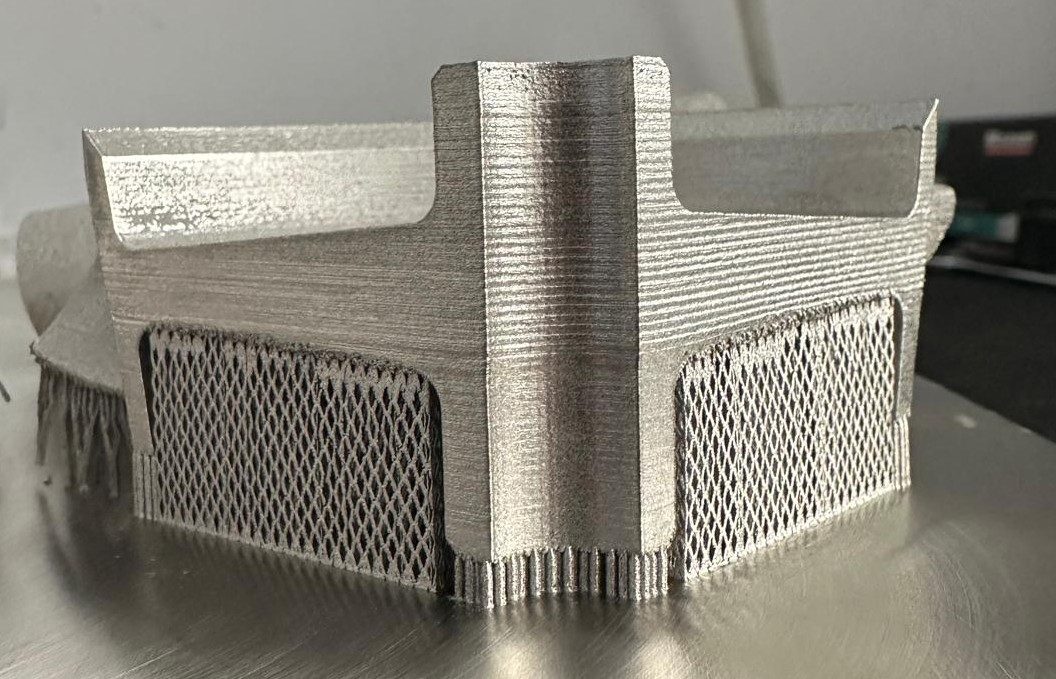
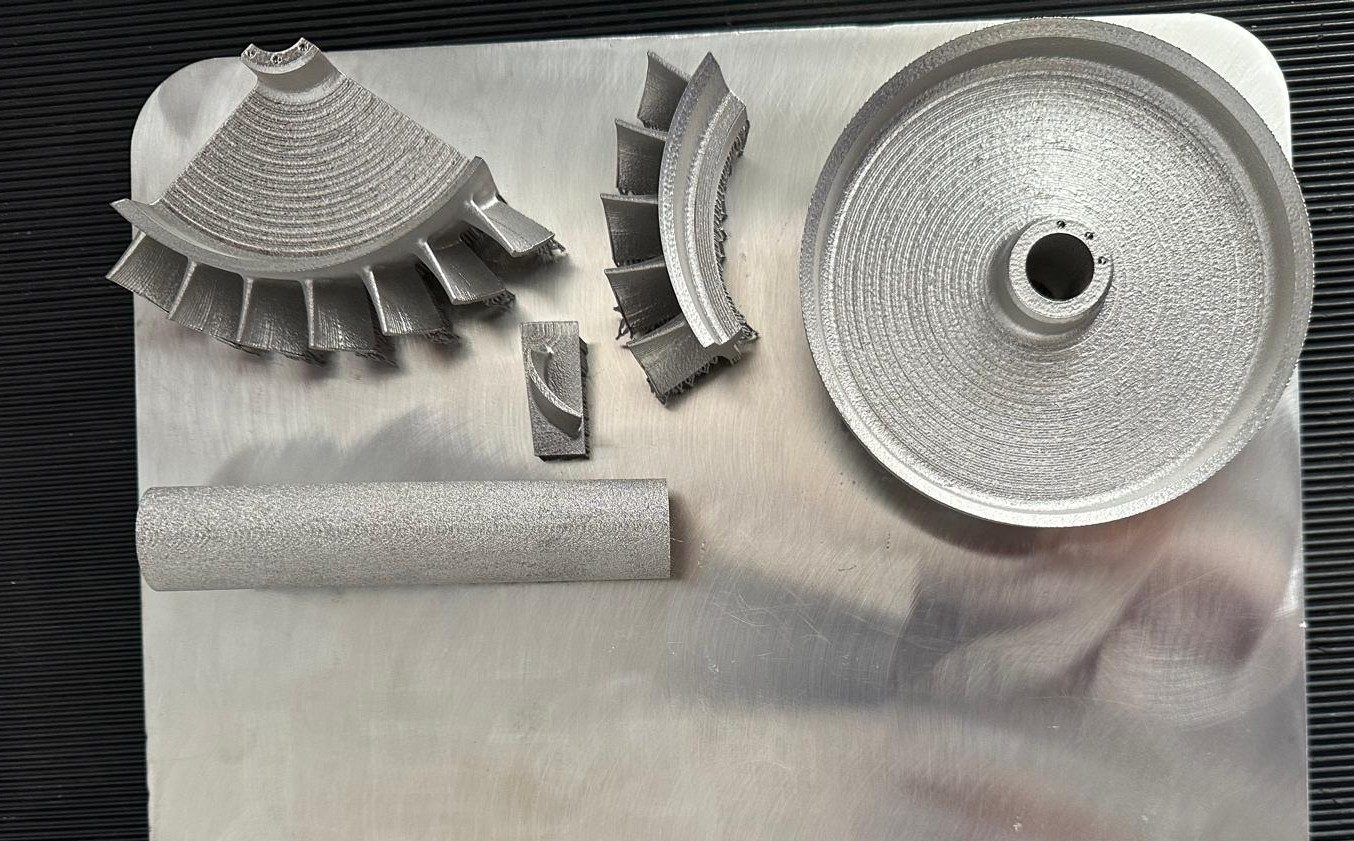
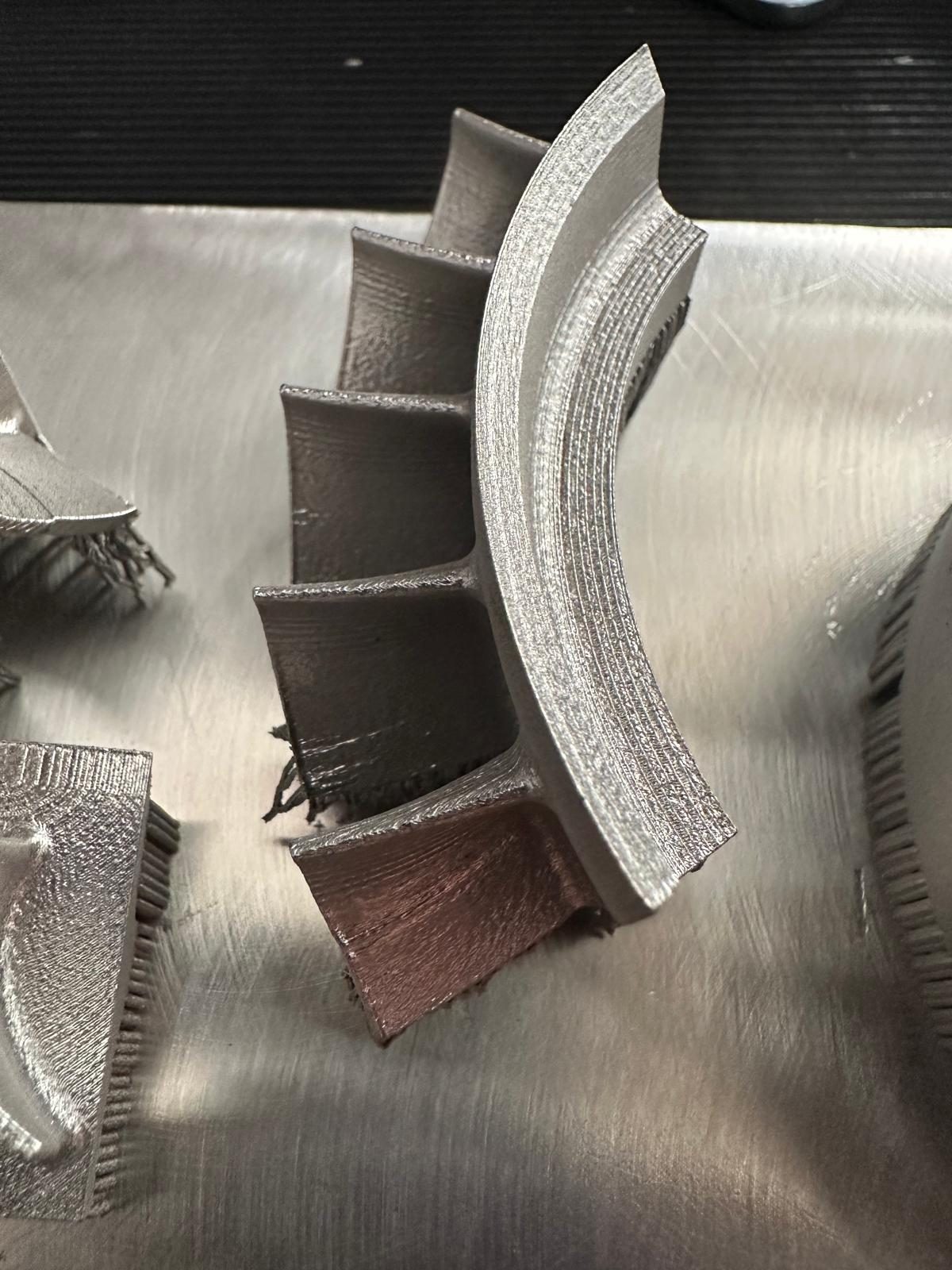
- Develop the additive manufacturing and post-processing technology for the rotor.
- Test and validate the rotor under laboratory conditions.
- Identify solutions for improving rotor performance.
Results / COMOTI contribution
- COMOTI carries out blisk design and optimisation activities, develops the L-PBF manufacturing process, and performs experimental characterisation and validation of IN718 superalloy and lattice structures.
- The main results obtained to date include:
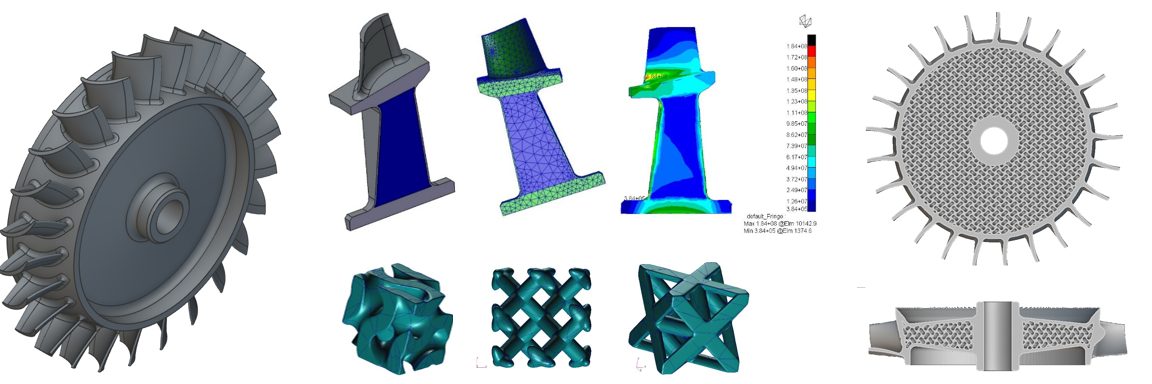
- Definition of the functional requirements and design of the blisk geometry based on thermogasdynamic calculations.
- CFD simulations and structural analyses to evaluate component behaviour under the specified operating conditions.
- Development and numerical evaluation of design variants incorporating gyroid, diamond and octet lattice structures, to reduce mass and analyse mechanical stresses.
- Development of the experimental matrix for optimising L-PBF parameters and evaluating microstructure, mechanical properties, and oxidation and corrosion behaviour.
- In Stage II, research continues with optimisation of the manufacturing process and experimental characterisation of the material and lattice structures, with a view to manufacturing and validating the blisk.
Technical specifications
- Component: integrally bladed turbine rotor (blisk).
- Material: nickel-based IN718 superalloy.
- Manufacturing technology: laser powder bed fusion (L-PBF).
- Internal structures analysed: gyroid, diamond and octet lattice structures.
- Design rotational speed: 20,000 rpm.
- Target turbine power: 70 kW.
- Turbine inlet gas temperature for design: 1,110 K (approximately 837 °C).
- Design gas mass flow rate: 0.68 kg/s.
- The numerical values represent turbine design parameters, not experimentally confirmed performance.