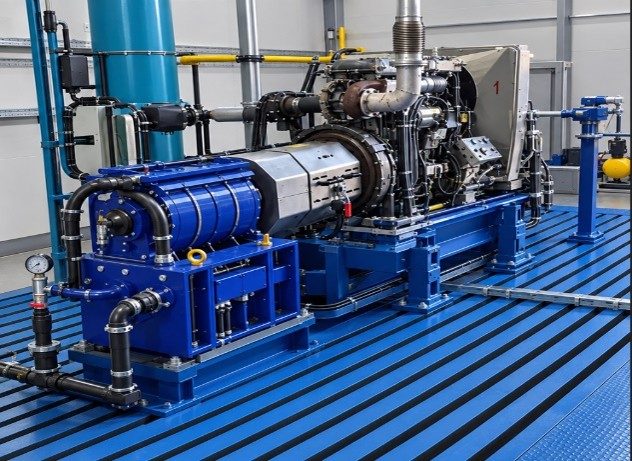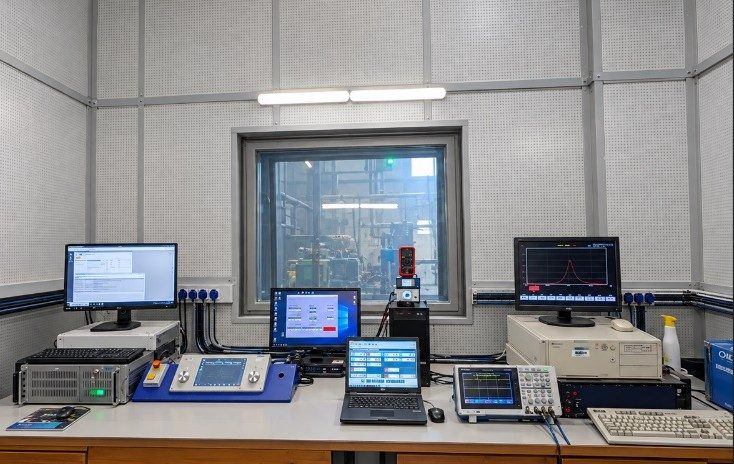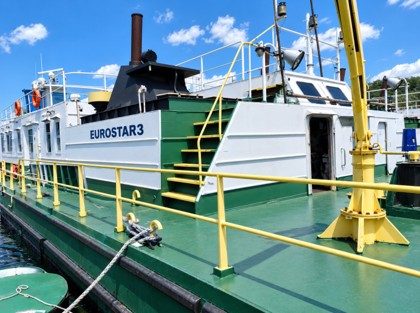



Test-bench testing of a diesel engine used for marine applications, fuelled with commercial fuel and ammonia.
Test-bench testing of a diesel engine used for marine applications, fuelled with commercial fuel and ammonia.
The project was initiated at the request of a commercial partner to investigate the potential development of technical solutions for dual-fuel ammonia operation of river-going commercial vessels currently in service.
This initiative is part of the current global trend towards reducing the carbon footprint associated with maritime transport through the use of decarbonised fuels, including ammonia produced from renewable sources.
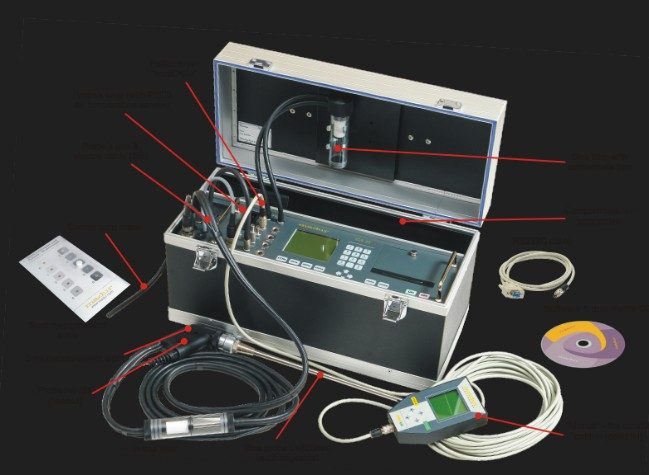
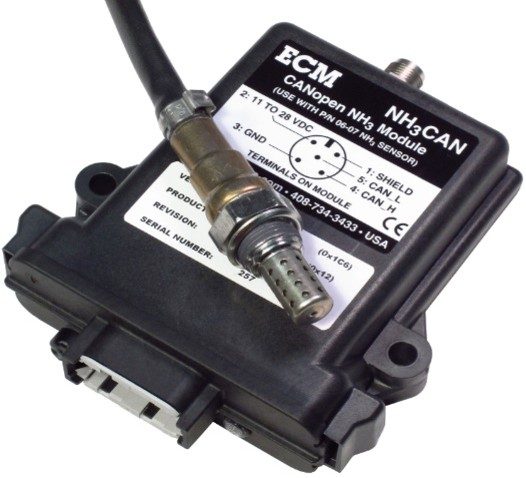
Acquisition and configuration of a system for measuring ammonia slip, representing one of the first systems of this type installed on a research test bench for reciprocating internal combustion engines in Romania.
Current TRL: approximately 3–4
Target TRL (estimated at project completion): approximately 5–6
Project objectives
The project aims to develop and validate critical technologies for adapting marine diesel engines to dual-fuel operation with ammonia.
Results / COMOTI contribution
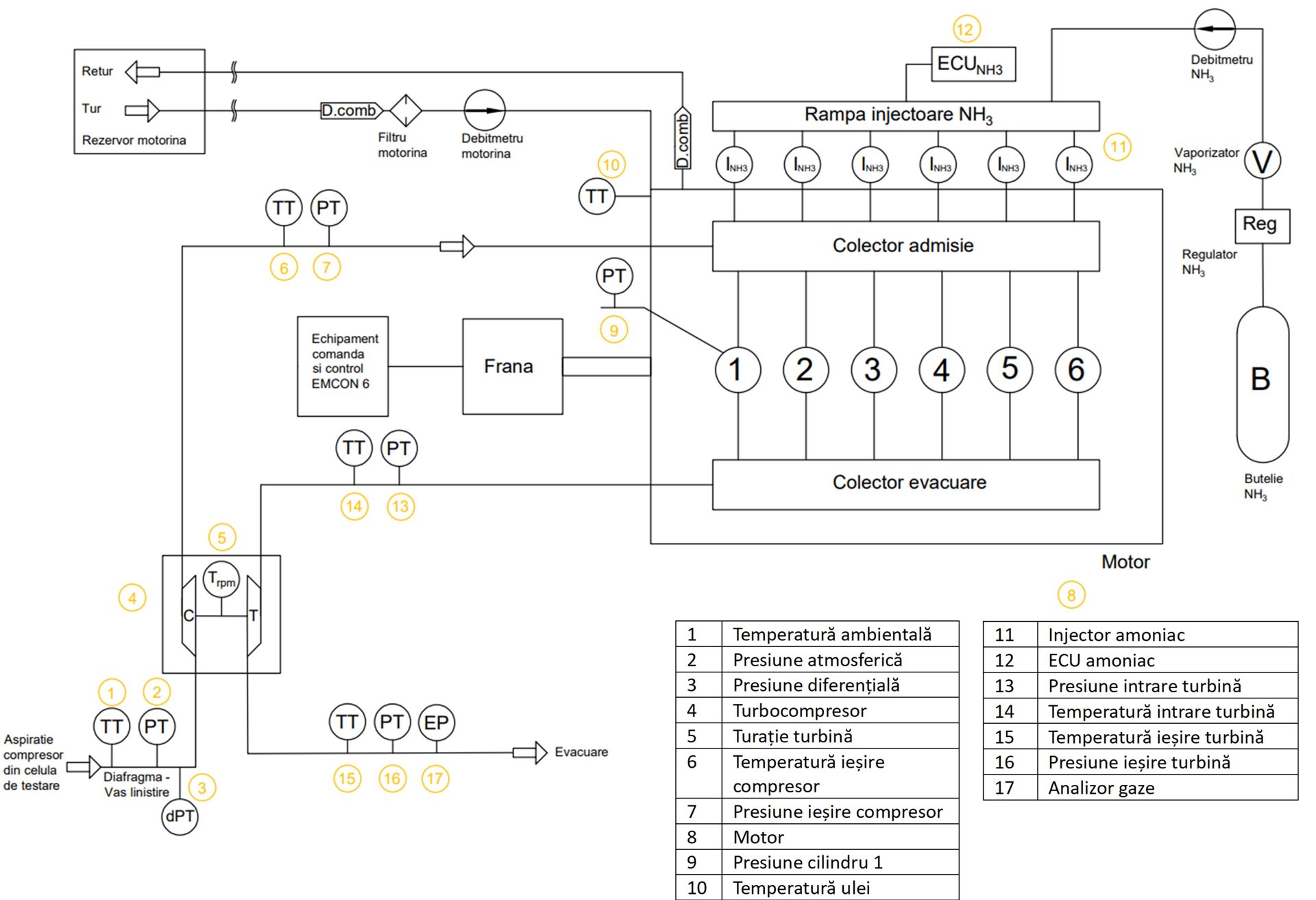
Multipoint injection of gaseous-phase ammonia; production of an ammonia injection system for a diesel engine
Technical specifications
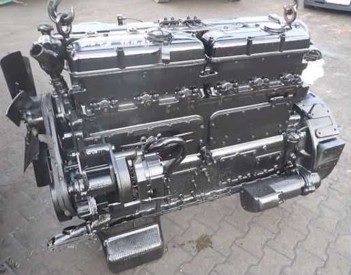
Experimental investigations on the COMOTI test bench for diesel engines operating in dual-fuel mode with ammonia, equipped with a WOLA SW680/14 engine
Acquisition and configuration of a system for measuring ammonia slip.
- At an ammonia fraction of 40%, HC emissions increased by 143.2%, 132.2% and 96.5% at loads of 25%, 50% and 75%, respectively. As the ammonia fraction increases, less diesel fuel is injected into the cylinder, facilitating the formation of a leaner mixture.
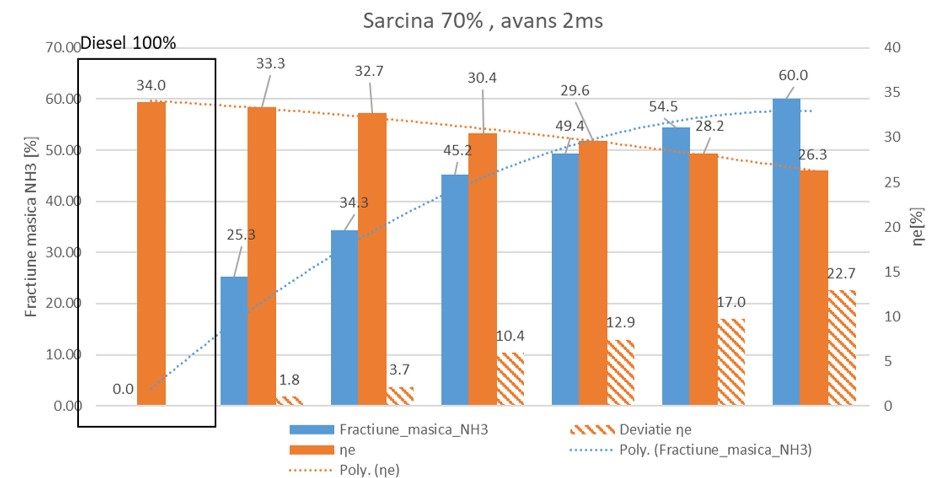
- At a load of 70%, with the optimum ammonia injection advance set to 2 ms, the ammonia mass fractions were varied from 25.3% to 60%. The maximum value results in a 22.7% reduction in , whereas for mass fractions of 25.3% and 34.3%, the reductions are much smaller, at 1.8% and 3.7%, respectively.ηe
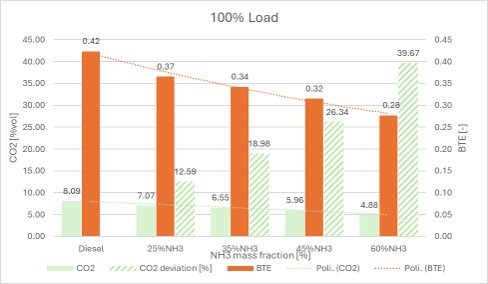
The experimental results indicate that the introduction of gaseous ammonia reduces combustion efficiency. The lower heating value of NH3 (18.6 MJ/kg), being lower than that of diesel fuel (42.8 MJ/kg), results in less energy released per kg of fuel burned; consequently, the engine requires more fuel to maintain the specified operating parameters (torque and rotational speed).